
In FDM 3D printing, proper cooling is important for improving print quality. The cooling fan helps the filament solidify quickly, while the fanduct guides and directs airflow to the printed area.
LONGER provides different fanduct designs for FDM 3D printers, each with unique airflow features for different printing needs. This article introduces the main LONGER fanduct options and their applications.
What Is a Fanduct for an FDM 3D Printer?
All FDM 3D printers are equipped with different fans, and each fan has a specific function. For example, some fans cool the motherboard, while others help cool the hotend.
The cooling fan for printed filament plays an important role in the printing process. It helps the filament cool and solidify faster, reducing deformation caused by heat.
However, the cooling fan cannot work effectively by itself. It usually works together with a fanduct, which is a duct that guides the airflow from the fan and directs it toward the printed model.
Different fanduct designs can change the airflow direction and concentration. Some designs provide wider cooling coverage, while others focus airflow on specific areas or divide airflow into multiple directions.
Classic Fanduct
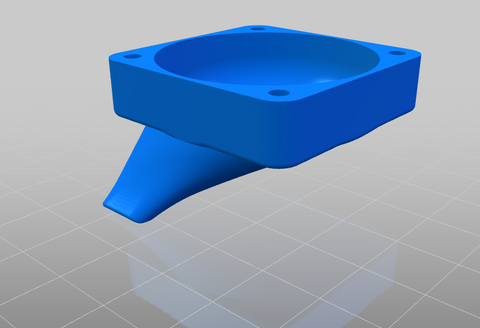
The Classic Fanduct is the default fanduct design for LONGER 3D printers. Its round airflow outlet allows a large amount of air to be concentrated and helps cool a large part of the printed model at the same time. This fanduct is suitable for:
- Prints with large surfaces
- High-speed printing
- Prints using large nozzles
The Classic Fanduct provides stable cooling coverage, making it a practical choice for general printing needs.
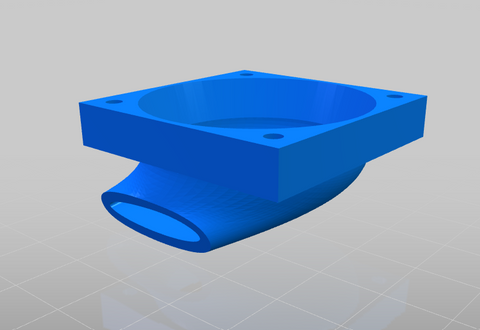
Squared Fanduct
The Squared Fanduct uses two rectangular airflow outlets to divide the airflow into two directions. This design helps distribute cooling air more evenly. Depending on the printing direction, it can cool both the printed area and the area that is currently being printed.
Features:
- Dual airflow direction
- Concentrated cooling zones
- Strong airflow output
One limitation is that during high-speed printing, the direct airflow may not always provide enough cooling time for the printed model.
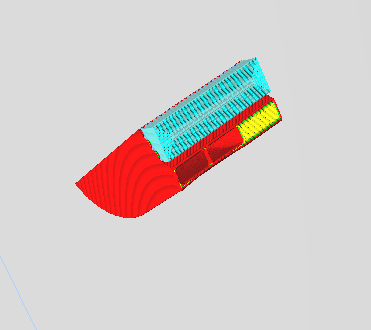
Precision Fanduct
The Precision Fanduct is designed to provide more concentrated airflow. Because of its structure, the airflow is focused through a smaller outlet, creating higher air speed and directing cooling power to a specific area. This design is mainly suitable for:
- Detailed models
- Thin structures
- Small parts with complex designs
For example, when printing tall and thin structures, heat may cause deformation or structure collapse. The Precision Fanduct helps dissipate heat faster and improves cooling performance in these situations.
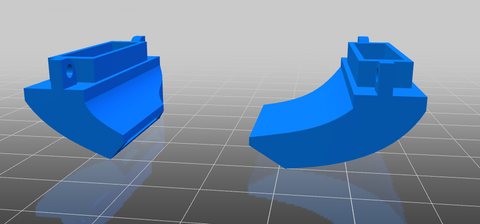
LONGER Dual Blower Kit
The LONGER Dual Blower Kit is designed to provide faster and more uniform cooling through two bilateral turbo fans and a dual airflow duct system.
With improved airflow distribution, it helps produce more detailed prints and improves bridging performance. Main Features:
- Dual turbo fan design
- More balanced cooling airflow
- Improved printing details
- Better bridging performance
The installation process is simple. Users can follow the video guide. The Dual Blower Kit is available from the official LONGER Store. The fanducts for the Dual Blower Kit are also 3D printable. STL files are available here.
Conclusion
A suitable fanduct can improve airflow control and help FDM 3D printers achieve more stable cooling performance.
LONGER provides different fanduct solutions for various printing requirements, from general cooling to detailed models and improved airflow distribution. Choosing the right fanduct design can help users achieve better printing results.
Share:
Convert a LONGER FDM 3D printer into a drawing machine
LONGER LK4 X vs. LK5 Pro vs. LK4 Pro vs. Orange 4K, Which 3D Printer is Best for You?